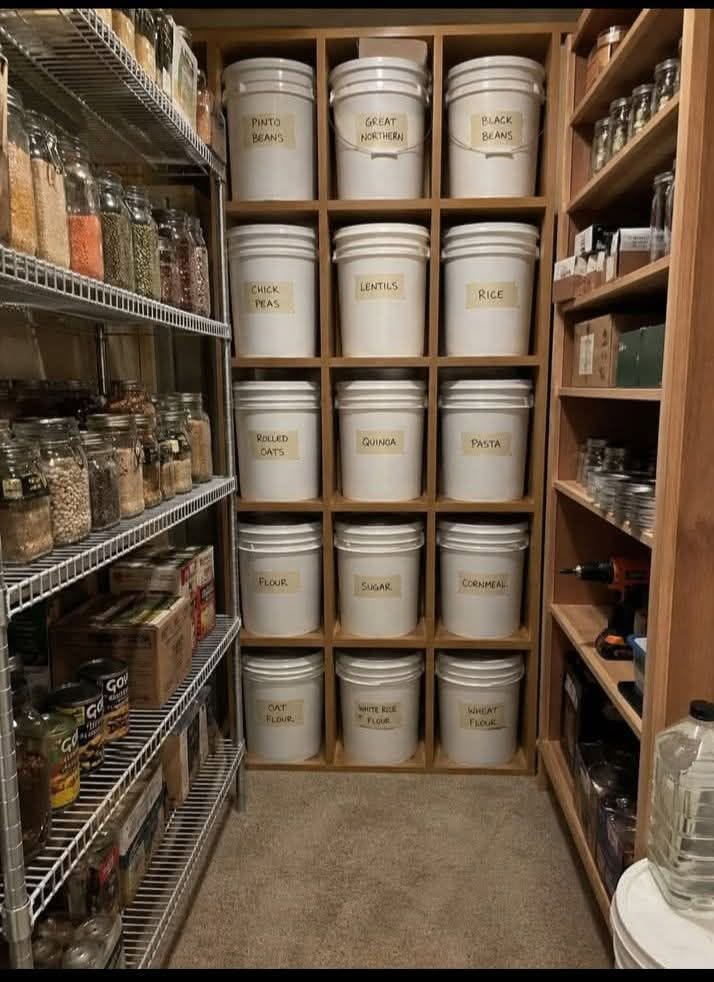
Not a bunker. A pantry. What to actually buy, how to store it, and how to rotate it so nothing is ever wasted.
The gov.uk/prepare guidance quietly recommends 'several days' of food that requires no cooking. A more useful working target for a British household is fourteen days — enough to absorb any realistic supply disruption without ever needing to open a ration pack.
The trick is to build it out of food you already eat. A 14-day stockpile that sits in the back of a normal pantry, rotates through normal weekly cooking, and never expires is worth ten times a shelf of freeze-dried meals you'll never touch.
Per adult, target roughly: 2kg of rice or pasta, 1kg of oats, 12 tins of protein, 6 tins of vegetables, 500g of nut butter, 1kg of hard cheese, UHT milk, tea or coffee, salt and oil.
Store in cool, dark conditions in airtight containers. Write the purchase date on every tin. Once a month, cook from the oldest items and replace them from the weekly shop. This is FIFO — first in, first out — and it's how commercial kitchens keep zero food waste.
For genuine emergency-only calories that live untouched, add a small backup of Seven Oceans ship's biscuit rations or freeze-dried meals. Consider them the smoke-alarm layer — you hope you never use them, but you're glad they're there.

Forget Superintelligence: The AI Risk That Nearly Triggered a Military Crisis
A recent report says erroneous chatbot-assisted intelligence brought US forces close to intercepting a Chinese vessel. The immediate danger is not a machine taking control — it is people trusting convincing automated output when the stakes are life and death.